My Portfolio
This portfolio chronicles my progression through UCD’s MSc in Project Management, beginning with hands-on coursework and collaborative assignments that have developed my leadership and practical skills.
From there, I showcase my experience in architectural technology and design, connecting technical expertise with real project delivery.
For my postgraduate work, each project shows how I’m applying project management tools and frameworks to real-world challenges, from planning and scheduling to risk management, stakeholder communication, and reflective learning.
My undergraduate work captures how I apply structured methodologies to real design and construction challenges, from detailed drawings and fit‑out coordination to team leadership and scheduling.
Together, these pieces reflect my goal of becoming a project manager who can bridge the gap between technical design, on-site delivery, and the human side of collaboration, bringing clarity, creativity, and accountability to every project I work on.
Explore each project by clicking the images below.

To see what my mentors have to say about me click here.
Website Report
Project Management MSc
Project Analysis: The Antwerp Diamond Heist - A Project Management Success
This project involved applying project management methodologies to create davingilligan.com (the website you're currently viewing).
Over a three-month cycle, I designed, developed, and launched a professional portfolio platform using structured PM tools, including Work Breakdown Structure, Gantt charting, risk assessment, and Agile methodology.
Key learnings centered on realistic estimation, scope management, stakeholder communication, and balancing planning rigor with adaptive flexibility.
The website was delivered on schedule, on budget, and with comprehensive quality assurance, demonstrating how disciplined project management principles apply even to personal branding initiatives.
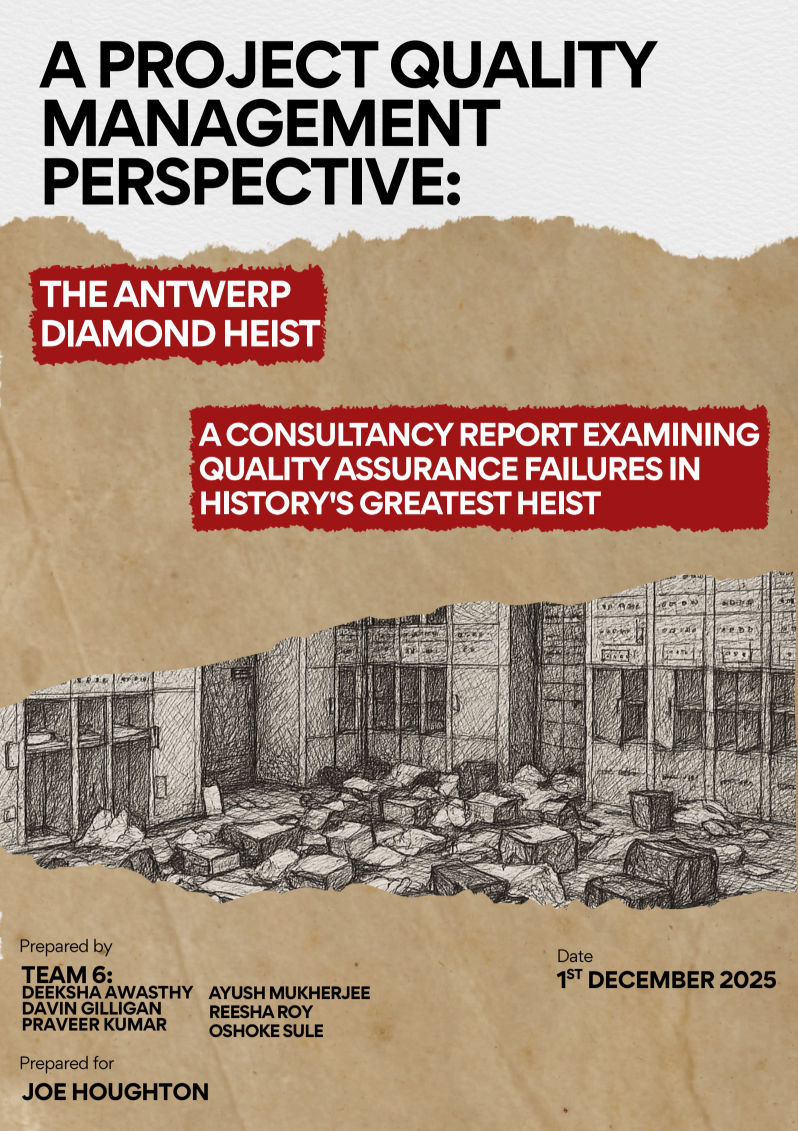
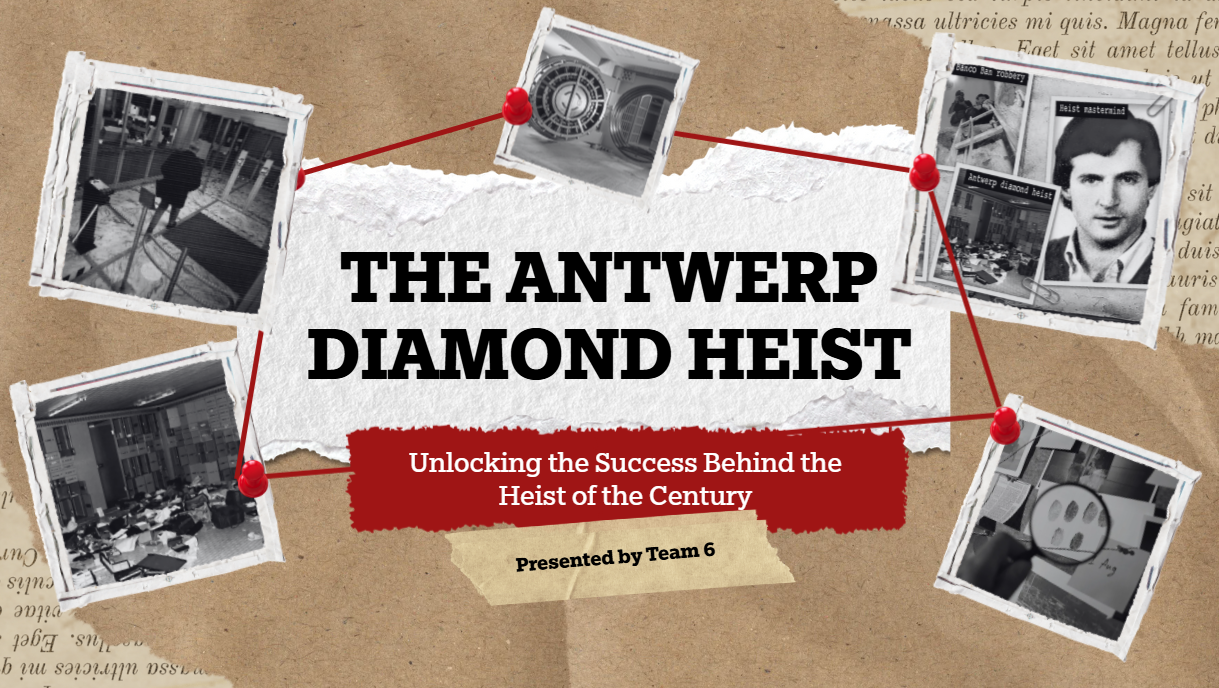
This team project involved a deep analysis of the 2003 Antwerp Diamond Heist, examining how sophisticated project management techniques enabled one of history's most audacious thefts.
Through detailed research and strategic analysis, we dissected the critical success factors in planning, team coordination, resource specialization, and risk mitigation that allowed a five-person operation to overcome a 10-layer security infrastructure.
The lessons on reconnaissance rigor, stakeholder infiltration, execution precision, and vulnerability assessment are profoundly applicable to legitimate project delivery, demonstrating both best practices in disciplined governance and cautionary insights into security system failures.
Click each image to view our full report and presentation.

This individual self-concept essay explored my personality and leadership identity through MBTI (ENFP-A Campaigner) and Big Five personality assessments.
Through critical reflection on authentic experiences,prefect leadership supporting bullying victims, rugby team captaincy, solo American adventure, and creative aspirations, I examined how my natural strengths in extraversion, openness, and emotional intelligence intersect with development areas in follow-through, conflict management, and boundary-setting.
The essay articulates core leadership challenges: maintaining focus on routine tasks, balancing empathy with accountability, and managing overcommitment.
I developed actionable strategies, including the 5-Minute Rule for distraction, structured feedback systems, and assertive communication training to bridge my natural harmony-seeking tendency with necessary leadership accountability.
The work demonstrates how self-awareness through multiple assessment frameworks, combined with authentic experience reflection, enables intentional growth as a team leader while maintaining personal authenticity.


Reflective Report
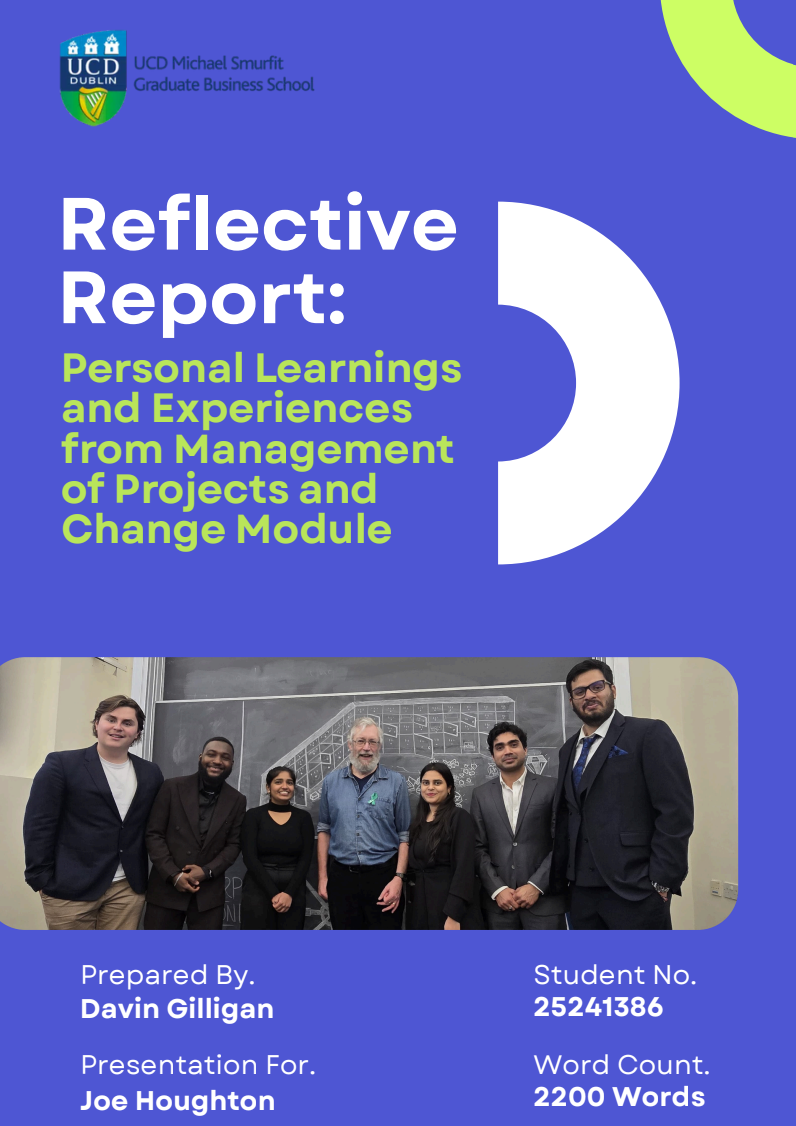
This reflective practice assignment examined my personal learning throughout the Management of Projects and Change module.
I underwent a fundamental shift in how I approach complex work. The ECCSR framework (Ethical, Collaboration, Creating, Sustainable, Results) provided systematic thinking tools beyond techniques.
Key learnings centered on Work Breakdown Structure decomposition, stakeholder engagement, risk management, and integrating ethical practice throughout project lifecycles. I transitioned from intuitive, energy-driven work to disciplined, structured practice grounded in professional frameworks, recognising that technical competency divorced from ethical grounding is insufficient.

Strategic Analysis Case Studies
My case studies on Starbucks, EA, and Meta and my group case study on NH Hotels acquisition of Minor International, showcase my strategic analysis skills, evaluating internal capabilities against market dynamics to deliver actionable recommendations. This methodology directly equips me for project leadership roles, rapidly assessing organisational positioning, identifying operational vulnerabilities, and developing actionable strategic roadmaps. Click each image below to explore a full analysis and my approach to tackling complex business challenges.


Who am I ? - A Self Concept Essay
BSc Architectural Technology
Throughout my undergraduate studies in Architectural Technology at TU Dublin, this portfolio documents a curated selection of projects that reflect my growth in both technical skill and design thinking.
From early explorations of concrete apartment complexes to advanced work in engineered timber structures and sustainable retrofits, the portfolio highlights proficiency in BIM, Revit, AutoCAD, and digital visualisation tools.
Detailed studies on façade integration, climate-resilient design, and collaborative projects illustrate a balanced approach that combines creativity with precision and sustainability.
Each project is presented with clear technical drawings, thematic research, and professional presentation layouts, showcasing a comprehensive journey from concept to buildable solutions.
Click on my portfolio to view all of my architectural projects.
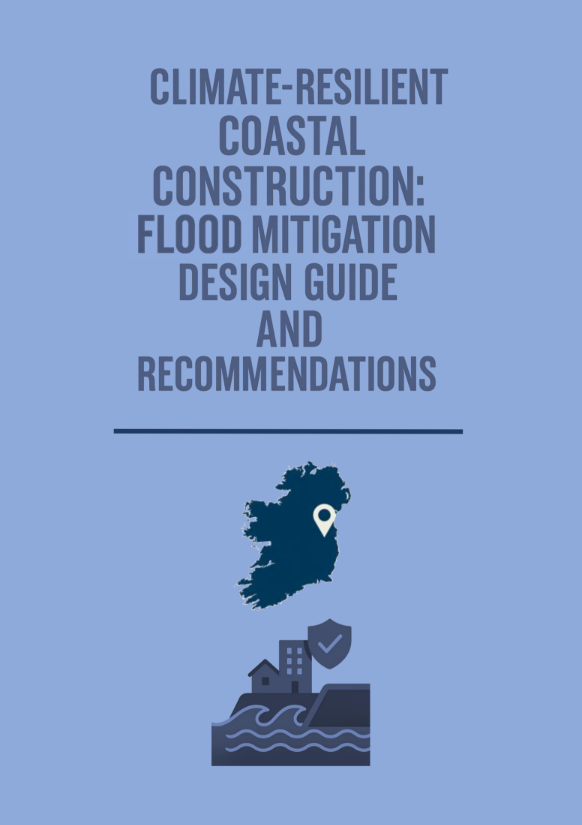
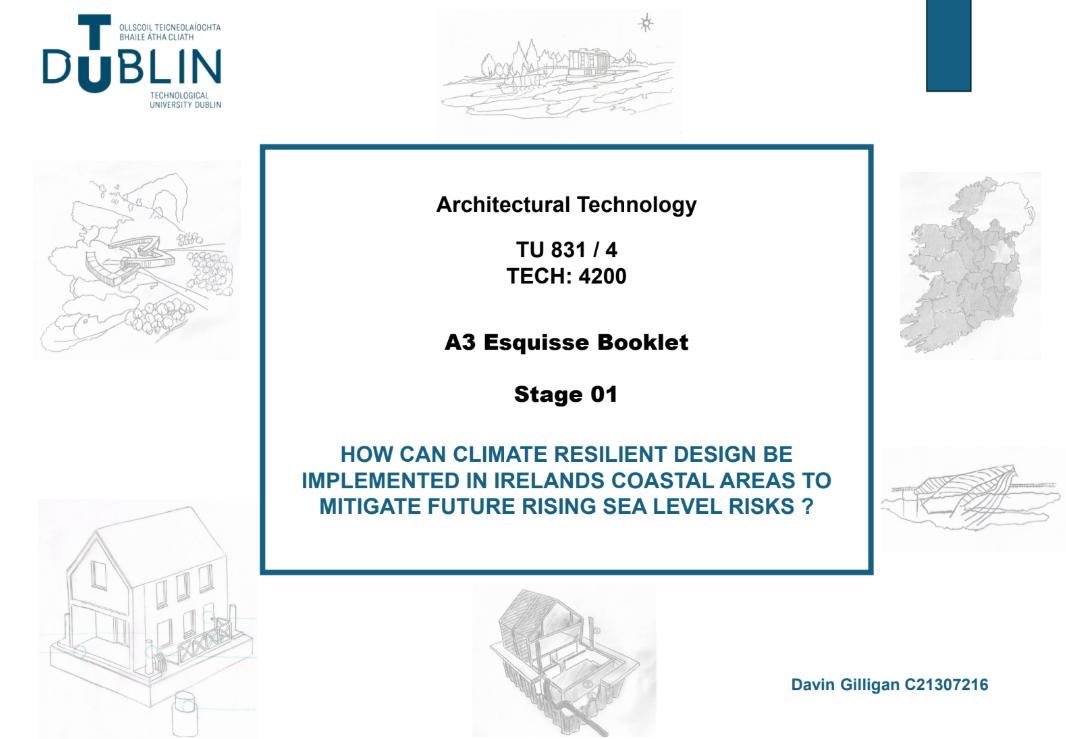

My thesis research, titled "How Can Climate Resilient Design Be Implemented in Ireland's Coastal Areas to Mitigate Future Rising Sea Level Risks?" focused on exploring how climate-resilient design can be effectively implemented in Ireland's coastal areas to mitigate the risks associated with future rising sea levels.
I chose this topic due to the urgent need to protect vulnerable coastal communities and infrastructure from escalating climate impacts. As part of this work, I created thesis posters, completed a detailed dissertation, compiled esquisé booklets, and curated a comprehensive climate guidelines booklet to guide sustainable and adaptive architectural solutions.
My research is available to view by clicking here.